Bolt Extractors & Socket Extractor Sets

Every job has one fastener that will not cooperate. This is Val's extractor range for the bolts that are already stripped, rounded or seized: GripEdge G-FORS socket extractor sets, Mayhew stud extractors and the drive sizes to match whatever is stuck. Find the right extractor below.

How socket extractors work

A normal socket grips the corners of a fastener head. Once those corners are gone, it just spins. An extractor socket has reverse-spiral flutes cut into the inside, so it bites into whatever is left of the head and grips harder the more you turn counter-clockwise. Drive it on with a hammer, put a breaker bar or impact wrench on it, and the fastener backs out. The same principle covers rounded nuts, damaged studs and bolts with chewed heads. It is the difference between a ten-minute recovery and drilling the fastener out.

Choosing the right extractor

Match the tool to how the fastener failed.

Rounded bolt heads and nuts: socket extractors

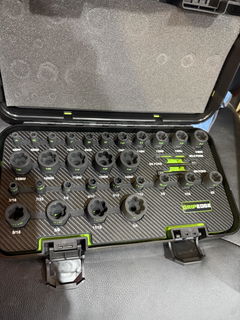
Spiral-flute extractor sockets are the workhorses. Val stocks them in metric and SAE across 1/4, 3/8 and 1/2 inch drive, in standard and deep, including the GripEdge G-FORS master sets that cover a full size range in one tray. A master set is the sensible buy, because the size you need is never the one you own.

Studs and broken shafts

A stud extractor grips the smooth shank of a stud where there is no head to work with, which is what you need for exhaust studs and broken fasteners standing proud of the surface.

Deep sockets and recessed fasteners

When the damaged fastener sits down a bore or on a long stud, a standard extractor cannot reach the flats. The deep G-FORS sets solve that, which matters on suspension and exhaust work.

Avoiding the problem in the first place

Extractors fix damage, but the better outcome is not causing it. Most rounded fasteners come from a worn or wrong-size socket, a twelve-point on a tired bolt, or a loose fit under an impact gun. Six-point impact sockets in the correct size prevent most of it, and GripEdge RPT drivers grip the flats rather than the corners on hex and star fasteners that are already worn. Keep a master extractor set for when prevention did not work.

FAQ

How does a bolt extractor socket work?

An extractor socket has reverse-spiral flutes cut into its inside face instead of the flat walls of a normal socket. You drive it onto the damaged fastener with a hammer so the flutes bite into whatever is left of the head, then turn counter-clockwise. The spiral design means the grip tightens as you turn, so it keeps hold of a head that a standard socket would slip off. It works on rounded bolts, damaged nuts and chewed fastener heads.

What is the difference between a bolt extractor and a screw extractor?

A bolt extractor is usually a socket that fits over the outside of a damaged bolt head or nut and grips what is left of it. A screw extractor is a tapered, reverse-threaded bit that goes into a hole drilled down the centre of a broken fastener and bites outward from the inside. Use a bolt extractor when there is still a head to grip. Use a screw extractor when the fastener has snapped off and there is nothing left above the surface.

Will an extractor socket work on a bolt that has snapped off flush?

No. Extractor sockets need some remaining head or shank to grip. If the fastener has broken off flush with or below the surface, you need a different approach: centre-punch it, drill a pilot hole and use a screw extractor, or weld a nut to the stub if there is enough material and access. A stud extractor can work where a broken fastener still stands proud of the surface, but a truly flush break needs drilling.

Can I use an impact wrench with bolt extractor sockets?

Yes, provided the extractor set is impact-rated, and most quality sets are. Seat the extractor on the fastener with a hammer first so the flutes bite properly, then apply the impact. Short bursts work better than sustained hammering, and if the fastener is not moving, heat and penetrating oil will do more than more torque. Check the set's rating before putting it on an impact gun, since a non-impact extractor can crack.

What size extractor set should I buy?

A master set covering both metric and SAE across 1/4, 3/8 and 1/2 inch drive is the right buy for most people. Extractors are a tool you reach for unpredictably, and the size you need is rarely the one you happen to own, so buying a full range once is cheaper than buying individual sizes during jobs. If you work on suspension or exhaust regularly, add a deep set for fasteners that sit down a bore or on a long stud.
Feature Image
DESIGNED FOR COMFORT

DESIGNED FOR COMFORT

Engineered for all-day wear, no matter how tough the job.

FREEBIES

FREEBIES

Every purchase comes with a freebie. Pick yours when adding your product to cart!

TESTED BY PROS

TESTED BY PROS

Gear designed, tested, and loved by hardworking professionals.

HASSLE-FREE RETURNS

HASSLE-FREE RETURNS

Quality is our quiet promise. We ensure everything we create is designed to perform.